Friction Stir Welding

Friction stir welding for liquid cold plates.

Solid-state joining of copper and aluminum for high-performance cooling and sealed thermal assemblies.

Overview

What is friction stir welding?

Friction stir welding (FSW) joins metal without melting it. A rotating tool is pressed into the seam and travelled along it. Friction heats the material until it softens, and the tool stirs the two sides together into one solid joint.

Because the base metal never melts, FSW avoids many of the problems of conventional fusion welding, such as porosity and heavy distortion, and it needs no filler wire or shielding gas.

That makes it a natural fit for cooling hardware. As AI and data-center servers pack more power into each chip, liquid cold plates have moved toward copper, and FSW is a proven way to seal them.

Typical applications

  • Copper liquid cold plates for AI and data-center servers
  • Direct-to-chip liquid cooling assemblies
  • Aluminum cold plates and heat exchangers
  • Battery trays and sealed enclosures
  • Heatsinks and other thermal assemblies
Why FSW

Why FSW for cold plates

An unbroken thermal path

FSW joins metal below its melting point without filler, forming one continuous bond that keeps the thermal performance of the base metal. Copper conducts heat at around 390 W/m·K, so a joint that does not get in the way matters.

Sealed for liquid cooling

Direct-to-chip liquid cooling loops run under pressure, and a coolant leak next to expensive processors is costly. FSW produces a solid, sealed seam designed for these loops, reducing the long-term risk of leaks.

Fewer defects, flatter plates

Because the metal never melts, FSW avoids the pores and cracks that can come with fusion welding, and it keeps plates flat, which matters for contact with the chip.

Copper and aluminum

Copper for the highest heat flux, aluminum where weight and cost matter. Tell us your alloy, thickness, and joint type and we will confirm what works.

Design for FSW

We review the joint early, including seam layout, channel design, and tool access, so the part is welded, machined, and inspected without surprises.

Finished to your drawing

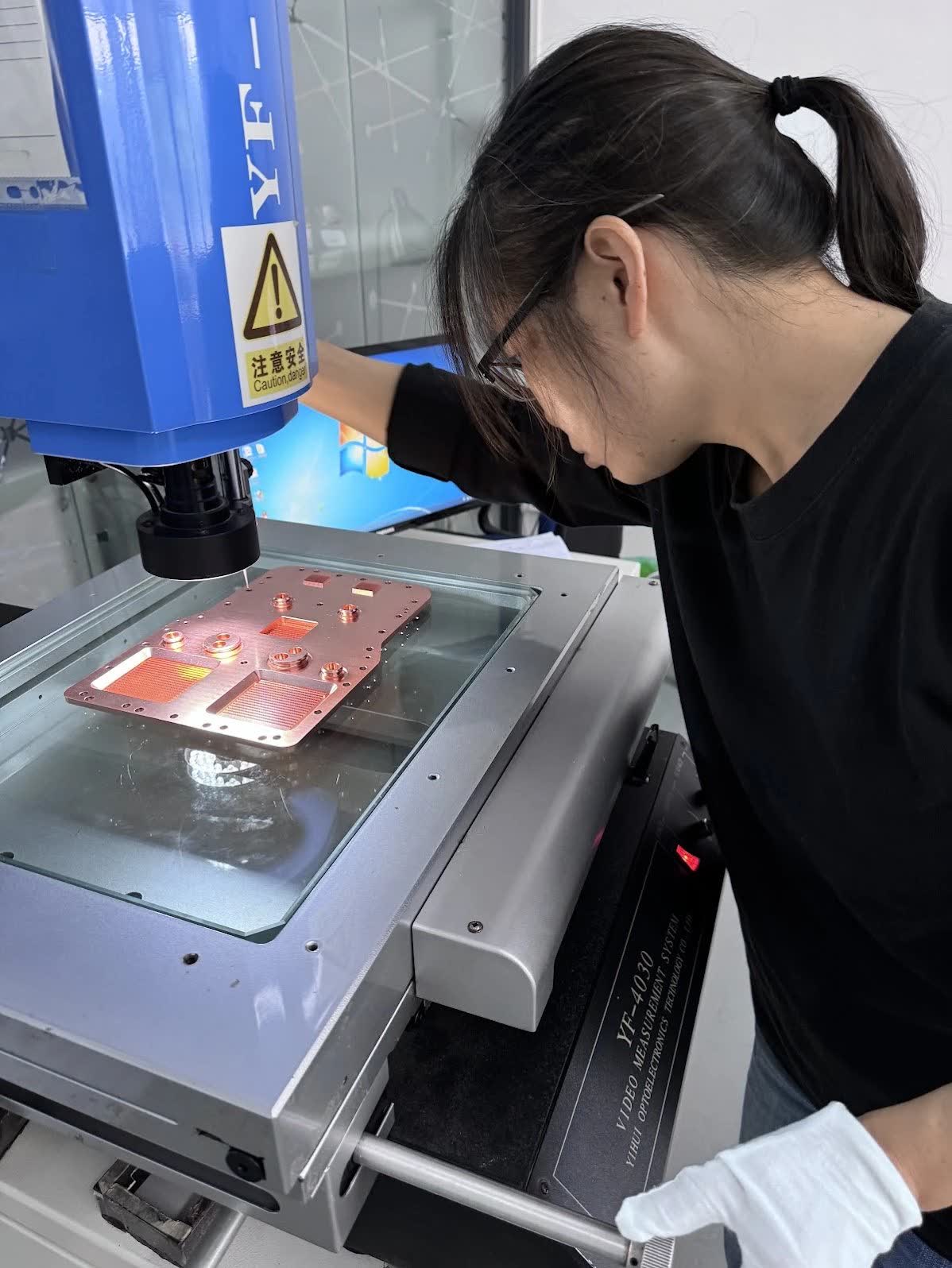
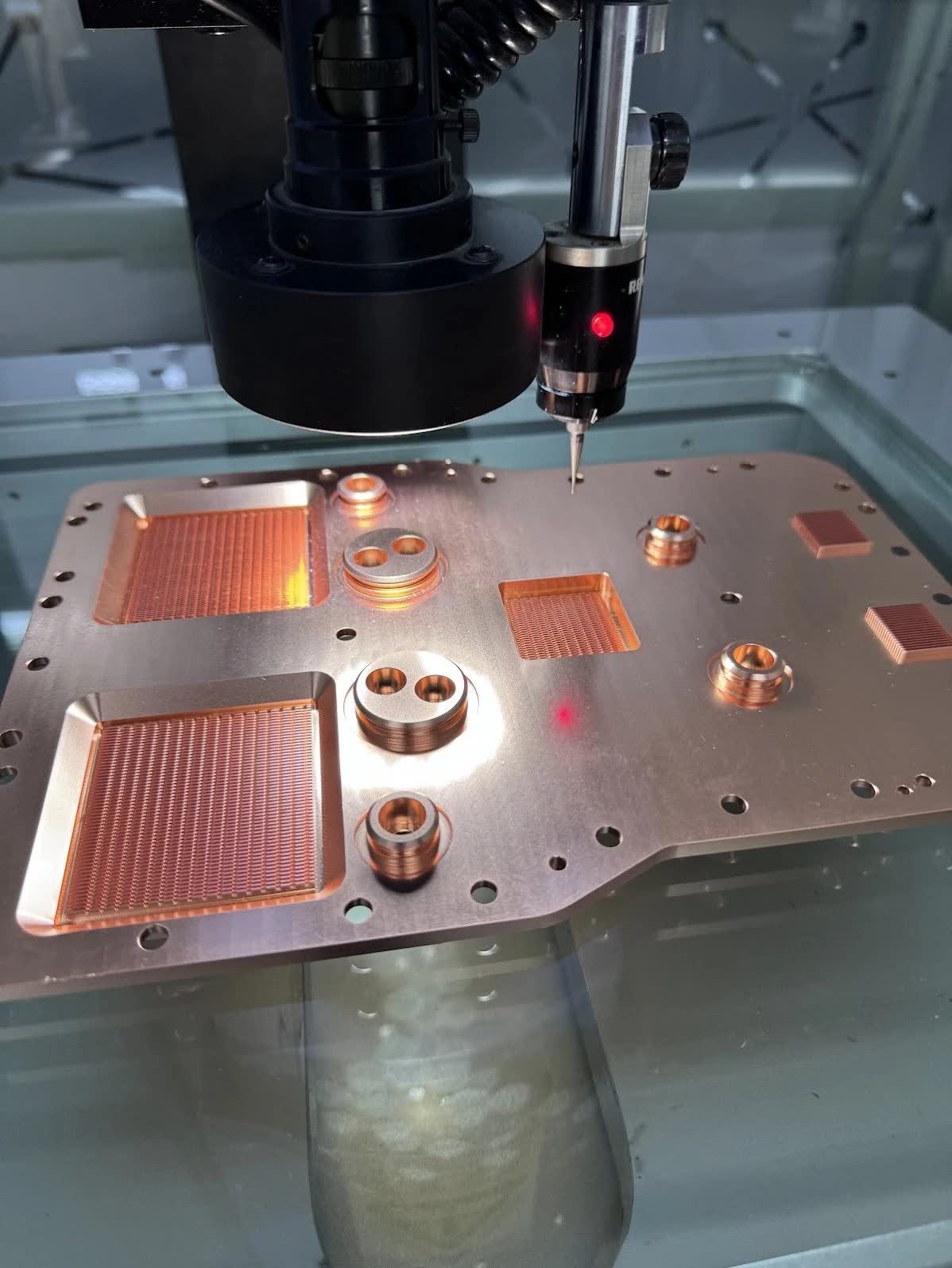
Cold plates can be machined, finished, and inspected to your drawing, so critical surfaces and flatness are finished after welding when the design calls for it.

From our factory

Cold plates in production and inspection

Have an FSW project?

Send us the drawings. We'll quote it.

Tell us about your part and we will respond with engineering input and pricing.

Request a Quote
Chat with us